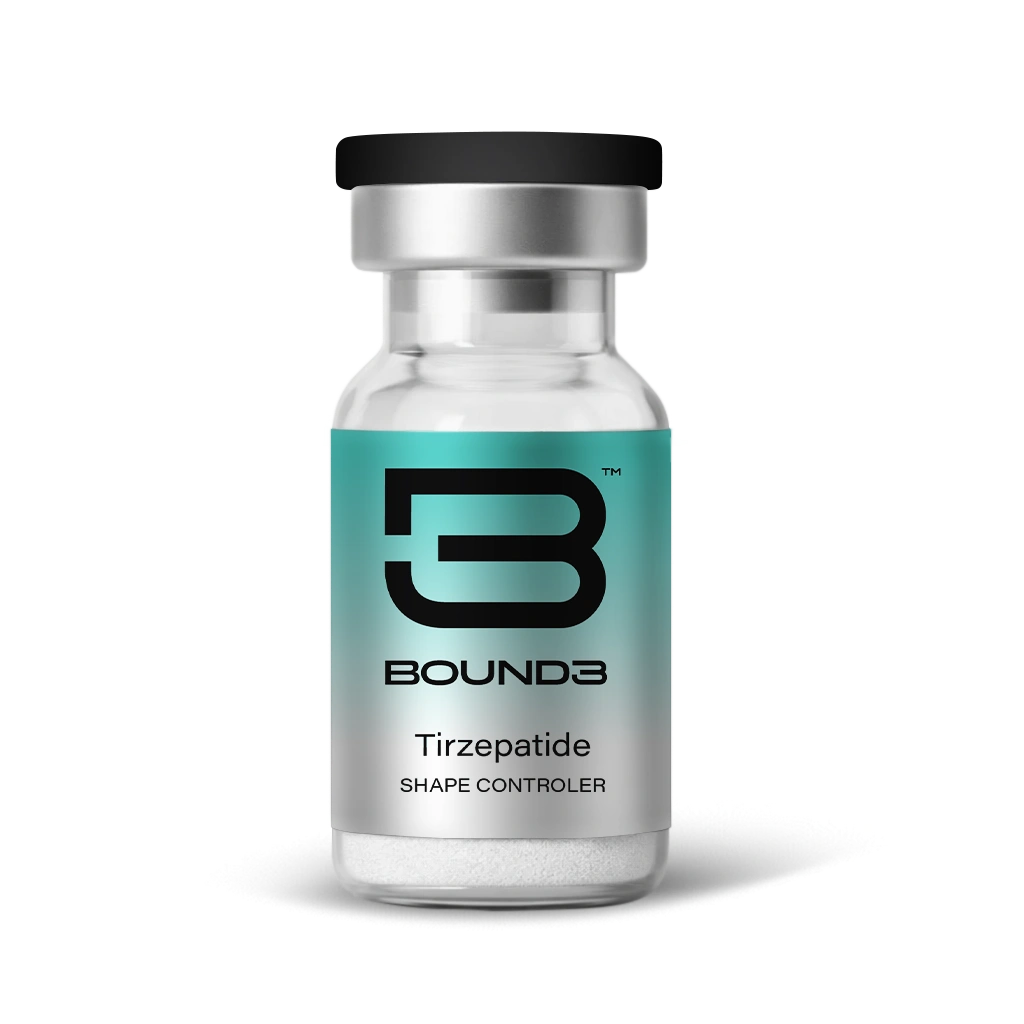
Tirzepatide
Tirzepatide is a dual-action compound that helps the body eat less, feel full longer, and better manage sugar and fat.
Product Details
| Parameter | Specification |
| Purity | ≥ 99% (HPLC, third-party tested) |
| Form | Lyophilized peptide powder |
| Content | 10 mg Tirzepatide per vial |
| Packaging | Glass vial with sterile closure |
| Storage Conditions | Store lyophilized at 2–8 °C (desiccated, protect from light) |
| Molecular Formula | C225H348N48O68 |
| Molecular Weight | ~4813.5 g·mol⁻¹ |
| Amino Acid Sequence | Synthetic GIP/GLP-1 receptor agonist peptide with C20 fatty diacid side chain for extended activity |
| CAS Number | 2023788-19-2 |
| Solubility | Bacteriostatic water |
Overview
Tirzepatide is a synthetic peptide belonging to a new class of dual incretin receptor agonists, acting on both GLP-1 and GIP receptors. It represents a major advancement in metabolic science as the first clinically validated molecule combining these two pathways (Frias et al., 2018; Jastreboff et al., 2022).
What it is and how it works
Tirzepatide activates: GLP-1 receptor (increases insulin secretion, reduces glucagon, slows gastric emptying, reduces appetite) and GIP receptor (enhances insulin response, improves fat metabolism, modulates energy storage). This dual action leads to: stronger metabolic effects than GLP-1 alone.
Effects confirmed by research
1. Weight loss
- up to ~15–22% reduction (Jastreboff et al., 2022).
2. Glycemic control
- strong HbA1c reduction (Frias et al., 2018).
3. Fat metabolism
- reduced visceral fat, improved lipid metabolism.
4. Cardiovascular markers
- improved lipid profile, reduced inflammation.
5. Appetite regulation
- strong satiety, reduced hunger.
Scientific description
Tirzepatide is: a dual GLP-1/GIP receptor agonist, regulator of: glucose metabolism, appetite, lipid metabolism.
References
Jastreboff, A. M., et al. SURMOUNT-1. NEJM. 2022. Frias, J. P., et al. SURPASS trials. Lancet. 2018. Drucker, D. J. Incretin biology. Cell Metabolism. 2021. Coskun, T., et al. Dual agonist mechanism. Science Translational Medicine. 2018.