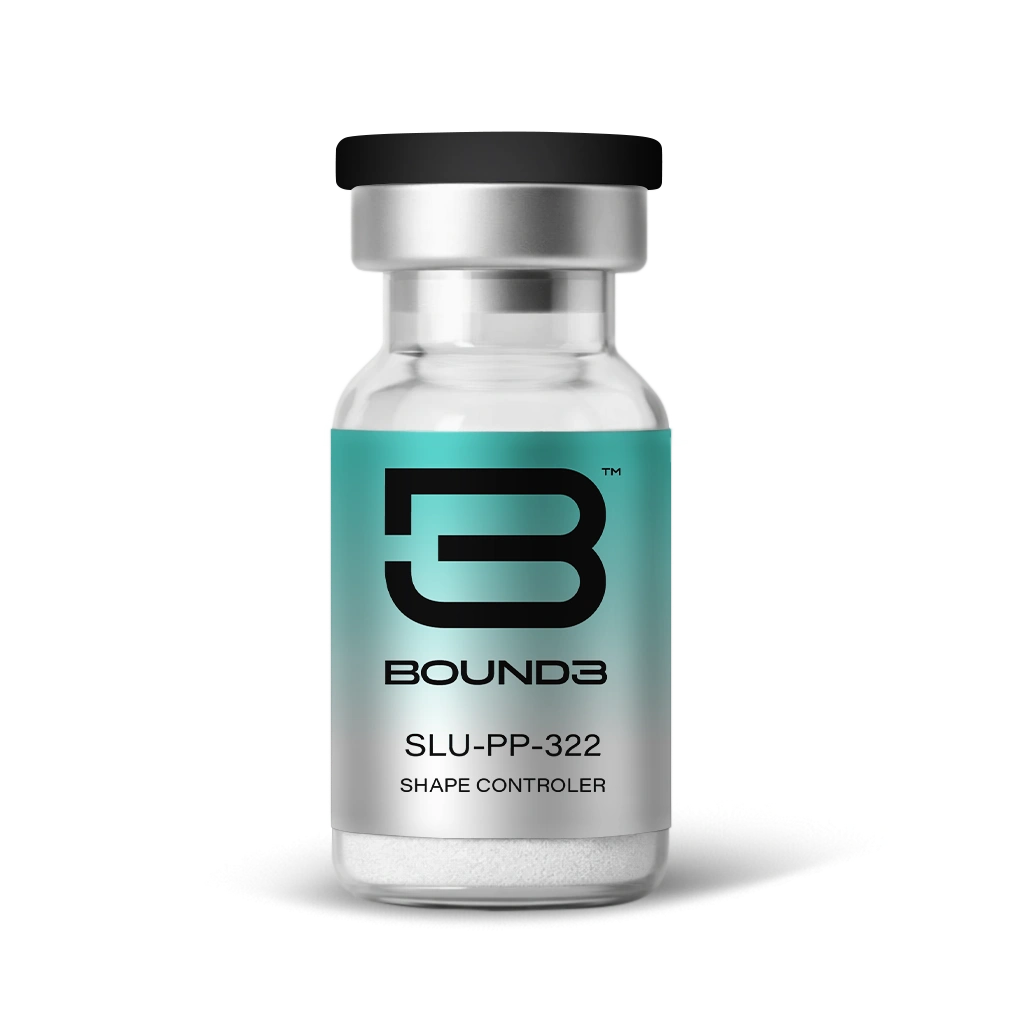
SLU-PP-332
In simple terms, SLU-PP-322 helps the body: burn more energy, act like it’s exercising, improve metabolism.
Product Details
| Parameter | Specification |
| Purity | High purity; third-party tested (COA/HPLC) |
| Form | Research capsules |
| Content | 250 mcg SLU-PP-332 per capsule |
| Total Capsules | 60 capsules per bottle |
| Packaging | Glass bottle with plastic lid |
| Storage Conditions | Store at room temperature, protect from light, keep desiccated |
| Molecular Formula | C16H16N2O3 |
| Molecular Weight | ~284.31 g·mol⁻¹ |
| IUPAC Name | 5-methoxy-2-(naphthalen-2-yl)-2,3-dihydroisoindol-1-one |
| CAS Number | 303760-60-3 |
| Solubility | Bacteriostatic water |
Overview
SLU-PP-322 is an experimental small molecule classified as a selective modulator of estrogen-related receptors (ERRα/ERRγ). These receptors regulate: mitochondrial biogenesis, oxidative metabolism, energy expenditure. It is studied as: a metabolic activator and exercise mimetic (Billon et al., 2017; Rangwala & Lazar, 2019).
What it is and how it works
SLU-PP-322 activates ERR receptors, leading to: activation of PGC-1α, increased expression of genes for: mitochondrial function, oxidative phosphorylation, fat metabolism. Result: increased energy production and efficiency.
Effects confirmed by research
1. Mitochondrial activation
- increased mitochondrial number, improved function.
2. Energy expenditure
- increased fat oxidation, higher metabolic rate.
3. Exercise mimetic effect
- mimics training adaptation, enhances oxidative metabolism.
4. Fat metabolism
- increased fat burning, reduced fat storage.
5. Metabolic flexibility
- improved energy switching.
Scientific description
SLU-PP-322 is: an ERR receptor agonist, regulator of: mitochondrial function, energy metabolism, oxidative pathways.
References
Rangwala, S. M., Lazar, M. A. ERR receptors and metabolism. Annual Review of Physiology. 2019. Billon, C., et al. ERR and mitochondrial function. Nature Reviews Molecular Cell Biology. 2017. Giguère, V. ERR biology. Endocrine Reviews. 2008. Schreiber, S. N., et al. PGC-1α and metabolism. Cell Metabolism.