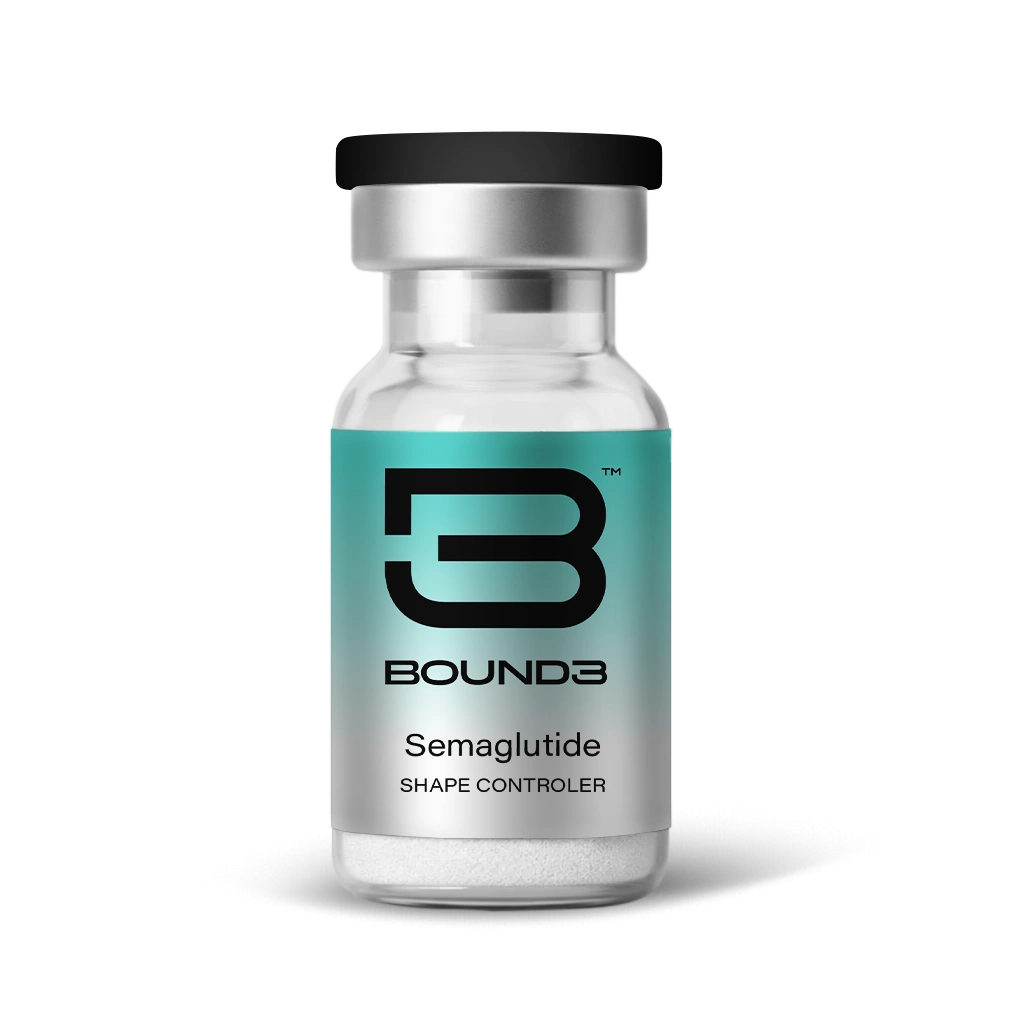
Semaglutide
In simple terms, semaglutide helps the body: feel full, eat less, control blood sugar.
Product Details
| Parameter | Specification |
| Purity | ≥ 99% (HPLC, third-party tested) |
| Form | Lyophilized peptide powder |
| Content | 10 mg Semaglutide per vial |
| Packaging | Glass vial with sterile closure |
| Storage Conditions | Store lyophilized at 2–8 °C (desiccated, protect from light) |
| Molecular Formula | C187H291N45O59 |
| Molecular Weight | ~4113.6 g·mol⁻¹ |
| Amino Acid Sequence | GLP-1 analog peptide with C18 fatty diacid side chain (modified for prolonged activity) |
| CAS Number | 910463-68-2 |
| Solubility | Bacteriostatic water |
Overview
Semaglutide is a synthetic analog of glucagon-like peptide-1 (GLP-1) and belongs to the class of GLP-1 receptor agonists (GLP-1RA). It is structurally modified to increase stability and extend its half-life, allowing prolonged biological activity. It represents a major advancement in: metabolic research, weight regulation, glucose control (Drucker, 2018).
What it is and how it works
Semaglutide mimics endogenous GLP-1 and works by: stimulating glucose-dependent insulin secretion, suppressing glucagon release, slowing gastric emptying, acting on appetite centers in the brain (Davies et al., 2017).
Effects confirmed by research
1. Weight loss
- ~10–15% body weight reduction, reduced appetite, improved eating control (Wilding et al., 2021).
2. Glycemic control
- lowers blood glucose, improves HbA1c, supports beta-cell function (Marso et al., 2016).
3. Cardiovascular effects
- reduced cardiovascular risk, improved lipid profile.
4. Appetite regulation (CNS)
- reduced hunger, increased satiety, altered food reward pathways.
5. Liver and metabolic effects
- reduced liver fat, improved metabolic markers (Newsome et al., 2021).
Scientific description
Semaglutide is: a long-acting GLP-1 receptor agonist, regulator of: glucose metabolism, appetite signaling, metabolic health.
References
Drucker, D. J. GLP-1 mechanisms. Cell Metabolism. 2018. Davies, M., et al. Semaglutide pharmacology. Lancet Diabetes Endocrinol. 2017. Wilding, J. P. H., et al. STEP trial. NEJM. 2021. Marso, S. P., et al. SUSTAIN-6. NEJM. 2016. van Bloemendaal, L., et al. GLP-1 brain effects. Diabetes. 2014. Newsome, P. N., et al. Semaglutide in NASH. NEJM. 2021.